Buying a Beach Home Near Pensacola
Buying a beach home near Pensacola is one of the most exciting real estate decisions a buyer can make — and one of the most complex. The Gulf Coast dream is real and achievable, but the path to getting there involves navigating insurance requirements, flood zones, condo association finances, and carrying costs that look nothing like what a typical inland home purchase involves.
This post is the complete guide for buyers seriously considering a beach or near-beach property in the Pensacola area — what's available, what it costs, what to watch for, and how to make the process work in your favor.
The Beach Home Landscape Near Pensacola
The Pensacola area offers several distinct beach living options, each with different character, price points, and practical considerations:
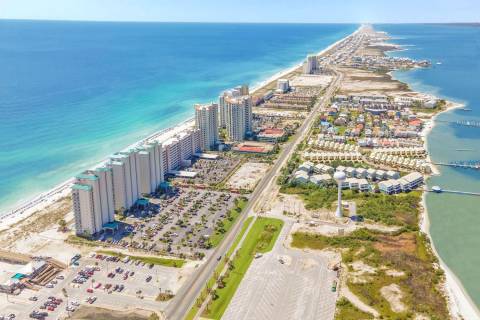
Pensacola Beach (Santa Rosa Island)
The iconic stretch. Pensacola Beach sits on Santa Rosa Island — a barrier island connected to Gulf Breeze by the Bob Sikes Bridge. The Gulf Islands National Seashore protects significant portions of the island from development, creating a natural environment that more developed beach markets can't replicate.
Character: Mix of high-rise condos on the Gulf side and a small permanent residential community with single-family homes and smaller condo buildings. Vibrant summer scene, quiet and intimate in winter. The permanent resident community is small and tight-knit.
Price range: Condos from $320,000 to $850,000+; single-family from $650,000 to $3,000,000+
Key considerations: Highest insurance costs in the metro, bridge commute for everything, tourist traffic in summer, Zone VE near Gulf
Perdido Key
Pensacola's quieter, more residential beach community. Located at the western end of the metro on a barrier island bordering Alabama, Perdido Key has developed as a permanent residential destination rather than a resort hub. Big Lagoon State Park and Gulf Islands National Seashore create natural boundaries that limit density.
Character: More residential than Pensacola Beach, less tourist infrastructure, quieter year-round. Popular with retirees and remote workers who want beach living without the summer resort atmosphere.
Price range: Condos from $280,000 to $700,000+; single-family from $450,000 to $1,500,000+
Key considerations: 20–30 minute drive from most services and healthcare, Gulf Islands National Seashore protects adjacent land, somewhat more manageable insurance than Pensacola Beach in some segments
Navarre Beach
East of Gulf Breeze on the same Santa Rosa Island as Pensacola Beach, Navarre Beach offers a quieter, less developed alternative. The permanent community is small, the beach access is excellent, and the proximity to both NAS Pensacola and Eglin Air Force Base gives it a military-adjacent buyer base.
Character: Residential barrier island community, minimal commercial development, quiet and natural atmosphere.
Price range: Condos from $300,000 to $600,000+; single-family from $450,000 to $1,200,000+
Key considerations: Gulf State Park adjacency, limited on-island services, Santa Rosa County
Near-Beach (Gulf Breeze, Innerarity Point, Scenic Highway)
For buyers who want proximity to the beach without the full barrier island cost and complexity, several near-beach communities offer meaningful access at more accessible price points:
Gulf Breeze: 10 minutes from Pensacola Beach via the Bob Sikes Bridge. Bay views in many neighborhoods. Access to top-ranked Santa Rosa County schools. Premium prices but not beach-level premium.
Innerarity Point / Perdido Key area mainland: Waterfront and near-waterfront properties on Perdido Bay with Gulf access. Quieter alternative.
Scenic Highway corridor: Overlooking Escambia Bay from the Pensacola mainland. Bay views, proximity to downtown Pensacola, more accessible price points.
What Beach Homes Actually Cost: Complete Carrying Costs
The purchase price of a beach home is only part of the story. Here's the complete monthly carrying cost picture for realistic beach purchase scenarios:
Scenario 1: $420,000 Perdido Key Condo (Zone AE, older building)
| Monthly Cost | Amount |
|---|---|
| Principal & Interest (10% down, 6.75%) | $2,450 |
| Property taxes | $365 |
| HO-6 unit policy | $165 |
| Flood insurance (Zone AE) | $185 |
| HOA fees (with master policy contribution) | $625 |
| Total monthly | ~$3,790 |
Scenario 2: $550,000 Pensacola Beach Condo (Zone AE, newer building, good wind mitigation)
| Monthly Cost | Amount |
|---|---|
| Principal & Interest (10% down, 6.75%) | $3,208 |
| Property taxes | $480 |
| HO-6 unit policy | $200 |
| Flood insurance (Zone AE) | $220 |
| HOA fees | $750 |
| Total monthly | ~$4,858 |
Scenario 3: $750,000 Navarre Beach Single-Family (Zone AE, newer construction)
| Monthly Cost | Amount |
|---|---|
| Principal & Interest (20% down, 6.75%) | $3,885 |
| Property taxes | $650 |
| Homeowners insurance | $600 |
| Flood insurance (Zone AE) | $280 |
| Total monthly | ~$5,415 |
These numbers illustrate why accurate pre-purchase insurance research is non-negotiable. The insurance and HOA line items alone can add $800–$1,200/month over what a comparable inland property would cost.
The Insurance Deep Dive for Beach Buyers
We've covered insurance extensively in earlier posts in this series. Here's the beach-specific summary every buyer needs:
Before You Make an Offer
Get insurance quotes on the specific property — not generic estimates — before you go under contract. For condos, you need:
- The condo association's master policy details (what does it cover? what are the deductibles?)
- A quote for your individual HO-6 policy
- A separate flood insurance quote (NFIP and private carrier)
For single-family beach homes:
- A homeowners insurance quote (expect $6,000–$14,000+/year for Gulf-adjacent properties)
- A flood insurance quote based on the specific property's elevation certificate
- Wind mitigation inspection report (if not already available)
The total insurance picture can make or break the affordability of a beach purchase. A property that looks affordable at the purchase price may carry $1,500–$2,000/month in combined insurance and HOA costs.
Zone VE vs. Zone AE: The Most Important Distinction
Zone VE properties — directly on the Gulf, subject to wave action — carry the highest insurance costs and the most stringent construction requirements. Zone AE properties — in the 100-year floodplain but not subject to wave action — are significantly more manageable.
Most condo purchases on Pensacola Beach and Perdido Key will be Zone AE unless they're directly on the Gulf front. Single-family homes and condos on the Gulf side of barrier islands are frequently Zone VE.
Know your zone before you know your price.
Condo Association Due Diligence: The Beach-Specific Checklist
Beach condos require more due diligence than any other Pensacola property type. Post-Surfside Florida laws have changed requirements significantly:
Required Documents to Review
Financial statements (last 2 years): Is the association operating with a surplus or deficit? What is the reserve balance?
Reserve study: The most critical document. Key questions:
- What is the percent funded? (70%+ is healthy; under 50% is concerning)
- Has a structural integrity reserve study been completed for buildings 3+ stories?
- What major capital expenditures are planned in the next 5–10 years?
- Are reserves funded to the legally required levels?
Meeting minutes (last 2 years): What has the board been discussing? Maintenance issues, legal disputes, insurance challenges, pending assessments?
Master insurance policy: What does it cover? "Bare walls in" vs. "all in"? What are the deductibles (including the separate hurricane deductible)? When was the policy last renewed and at what premium?
Special assessment history: Any assessments in the past 5 years? Any currently being discussed or anticipated?
Pending litigation: Is the association involved in any active lawsuits? (Affects financing availability)
Building inspection reports: For buildings over 25 years old, has the milestone inspection required by Florida law been completed? What did it find?
The Special Assessment Risk in 2026
Florida's new condo safety laws (fully phased in by 2026) require buildings 3 stories or taller to:
- Complete structural integrity reserve studies
- Fully fund structural reserves (cannot be waived by owner vote)
- Complete milestone inspections at 25 and 30 years
Many older Pensacola Beach and Perdido Key condo buildings have been underfunding reserves for years. The new requirements are forcing those buildings to fund shortfalls through special assessments — some of which are substantial.
A building that hasn't yet completed its structural reserve study or fully funded reserves is a yellow flag. It may be about to discover significant capital needs and levy corresponding assessments.
Financing Beach Properties: What's Different
Beach property financing has specific nuances beyond what standard home purchases involve:
Condo Warrantability
Fannie Mae and Freddie Mac (which back the majority of conventional mortgages) have specific requirements for condo projects to be "warrantable" — eligible for conventional financing. Condo buildings can be non-warrantable for several reasons:
- More than 35% of units owned by investors (rental-heavy buildings)
- Active significant litigation involving the HOA
- Single entity owning more than 10% of units
- Delinquency rates above 15%
- Inadequate reserves
- Pending special assessments that affect financial stability
Non-warrantable condos require portfolio lending or other non-conventional financing — typically at higher interest rates and with larger down payment requirements (often 20–30%).
Before falling in love with a beach condo, verify that the project is warrantable with your lender. This check takes a few days and can prevent you from discovering at closing that your preferred financing isn't available for the specific building.
Elevated Down Payment Requirements
Lenders frequently require larger down payments for beach and vacation-area properties than for primary residences in non-coastal markets:
- Primary residence, conventional: 5–10% down possible
- Investment/vacation property: 20–25% typically required
- Non-warrantable condo: 20–30% required
For buyers intending to use the property as a primary residence, this may not apply — but for second homes and investment properties, the down payment requirement significantly affects the purchase capital needed.
VA Loans at the Beach
VA loans are available for beach properties when they will be used as a primary residence. For military buyers relocating to NAS Pensacola who want to live on Pensacola Beach or Perdido Key, VA financing is available and can be significant — zero down payment on a $450,000 condo means $45,000 in down payment savings.
The VA does apply its own appraisal standards (MPRs — Minimum Property Requirements) that can create issues on properties with deferred maintenance or condition concerns. Have a VA-experienced agent and lender for any VA purchase at the beach.
The Seasonal Living Reality
One thing many beach home buyers underestimate is how dramatically the beach experience changes by season — and what that means for living there year-round.
Summer (June–September): The beach is at its best — warm Gulf water, vibrant social scene, full amenities. It's also peak tourist season. Restaurants have waits. Traffic on the bridge backs up. Parking is competitive. Grocery stores in the beach area are crowded. The beauty is undeniable; the crowds are real.
Fall (October–November): Many locals' favorite season. Tourists have gone. The beach is quiet and stunning. The water is still warm enough to swim in October. This is the version of beach living that converts casual visitors into permanent residents.
Winter (December–February): Quiet, mild, and intimate. The permanent community shrinks but the residents who remain know each other well. Beach walks in 60-degree weather with no one else around. Some beach-area businesses reduce hours or close. It's a specific kind of beautiful that not everyone appreciates on first visit.
Spring (March–May): The reawakening. Spring breakers arrive in March and April. The energy rebuilds toward summer. The weather is spectacular.
Year-round beach residents consistently describe the off-season — particularly fall and winter — as the best part of living there. The summer, while beautiful, requires adaptation. Understanding this rhythm before you buy helps you evaluate whether the beach lifestyle actually fits your life.
Practical Tips for Beach Home Buyers
1. Visit in summer AND in winter before buying. The off-season experience is dramatically different and equally important to understand before committing.
2. Get the elevation certificate before you get the insurance quote. For any Zone AE property, the certificate is the foundation for accurate flood insurance pricing. Without it, you're estimating.
3. For condos: read the documents, not just the summary. The HOA financial summary looks different from the actual reserve study. Read the source documents.
4. Research the building's milestone inspection status. For buildings over 25 years old, find out if the required inspection has been completed and what it found. This is publicly available in many cases or can be requested from the association.
5. Drive the bridge at multiple times. If you'll be crossing the Bob Sikes Bridge to Gulf Breeze and Pensacola daily for work or errands, experience the Tuesday morning commute AND the Saturday afternoon beach traffic before you commit.
6. Understand the hurricane deductible. Beach area properties have hurricane deductibles of 2–5% of insured value — not a flat dollar amount. On a $500,000 insured value, a 2% hurricane deductible means $10,000 out of pocket before insurance pays after a hurricane claim. This needs to be in your emergency fund.
7. Don't buy the cheapest condo in a building with financial problems. A lower purchase price in a building headed for a special assessment is not a good deal — it's a down payment on a future liability.
Is a Beach Home Near Pensacola Right for You?
A beach home near Pensacola is the right choice for buyers who:
- Deeply value Gulf Coast living as a daily lifestyle, not just a vacation destination
- Have the financial strength to carry meaningfully higher insurance costs without straining their budget
- Are prepared for the bridge commute and the seasonal character of barrier island life
- Have done genuine due diligence on the specific property's flood zone, insurance costs, and (for condos) association financial health
- Understand the hurricane deductible exposure and have appropriate reserves
It's not the right choice for buyers who:
- Are primarily focused on finding the lowest monthly payment
- Haven't researched the insurance costs for the specific property
- Are buying on a vacation impression without understanding year-round life
- Can't afford the reserves for hurricane deductibles and potential special assessments
The beach near Pensacola is extraordinary. The path to owning a piece of it requires more preparation than most purchases — but for the right buyer who does the work, it delivers a life that consistently exceeds expectations.
Ready to Explore Beach Home Options Near Pensacola?
Sean and Shaunda Killingsworth specialize in beach and coastal properties throughout the Pensacola area. We know the buildings, the flood zones, the insurance landscape, and the lifestyle realities. Let's find the right beach home for your situation.
Sean & Shaunda Killingsworth Engel & Völkers Pensacola 190 South Jefferson Street, Pensacola, FL 32502 📞 +1 850-332-2457 ✉️ killingsworthhomes@gmail.com 🌐 movingtopensacolabeach.com
If you're relocating to Northwest Florida, let's talk.
Categories
Recent Posts