Buying Remotely in Pensacola
Remote home buying has gone from a pandemic-era exception to a mainstream path for out-of-state buyers in Pensacola. In a market where a significant portion of buyers are relocating from California, the Northeast, Atlanta, and other high-cost metros, purchasing without being physically present at every step is increasingly common — and increasingly well-supported by technology, professional infrastructure, and agents experienced with the process.
This post is the complete guide to buying a home in Pensacola remotely — what the process looks like, what tools and professionals you need, where the risks are, and how to protect yourself throughout a transaction you're navigating from a distance.
Is Buying Remotely in Pensacola Actually Feasible?
Yes — with the right agent, the right preparation, and the right mindset about what remote buying can and can't replace.
Remote buying works best when:
- You've done extensive research on neighborhoods and have clear preferences
- You have a highly capable, locally experienced agent acting as your eyes and ears
- You're willing to invest in additional professional representation (independent inspector, potentially a buyer's representative for walkthrough)
- You approach the purchase with appropriate humility about what you don't know from a distance
Remote buying is riskier when:
- You haven't researched neighborhoods thoroughly and expect the agent to decide for you
- You're relying on listing photos and videos as your primary property evaluation tool
- You skip or rush the inspection process to speed up closing
- You don't have a trusted local contact who can visit properties on your behalf
The buyers who successfully purchase remotely are those who treat the distance as a logistical challenge to solve — not an excuse to skip steps that matter.
Step 1: Do Your Neighborhood Research Remotely
Before you look at a single listing, spend time understanding the Pensacola market geography. The neighborhood you choose shapes everything — schools, commute, insurance costs, flood zone, daily quality of life. Choosing wrong from a distance and discovering it after moving is the most common and most expensive remote buyer mistake.
Tools for remote neighborhood research:
Google Street View: Walk every street you're seriously considering. Look at neighboring homes, street conditions, commercial proximity, and neighborhood character. While Street View imagery can be 1–3 years old, it provides more contextual information than listing photos.
YouTube neighborhood tours: Search "Pensacola neighborhood tour" and "[specific neighborhood] Pensacola." Real residents, real estate agents, and community channels have produced genuine video tours of most major Pensacola neighborhoods. Twenty minutes of walking video tells you more about a neighborhood's character than hours of reading.
CrimeMapping.com and SpotCrime.com: Map-based crime data for specific blocks and intersections. Don't evaluate neighborhood safety from city-level statistics — look at the specific streets.
FEMA Flood Map Service Center (msc.fema.gov): Look up flood zone designations for any address you're seriously considering. This is non-negotiable and takes two minutes.
Escambia County Property Appraiser and Santa Rosa County Property Appraiser websites: School zone lookup, property tax records, permit history. Both have online tools for looking up address-specific information.
Local Facebook groups: "Moving to Pensacola," "Pensacola Newcomers," Gulf Breeze and Pace community groups. Real residents answer specific questions honestly. Ask about specific streets, intersections, neighborhood characteristics.
This blog series: You're already here. Blogs 91–150 cover every major Pensacola real estate topic in detail — use this as your research foundation.
Step 2: Choose the Right Agent — The Most Critical Decision
When buying remotely, your agent is your primary connection to the market. Their quality determines more about your outcome than any other single factor.
What a remote-buyer-capable agent must do:
Live video walkthroughs: Not a pre-recorded listing video — a live FaceTime or Zoom walkthrough where the agent narrates what they see, opens every door and cabinet, looks under sinks, checks the exterior from every angle, and answers your questions in real time. This is non-negotiable. If an agent won't do this, find someone who will.
Tell you what the listing photos didn't show: Listing photos are taken with wide-angle lenses on good days. A good agent will tell you about the busy road behind the fence line, the smaller-than-it-looks backyard, the neighbor's property that affects value, or the street that functions differently from how it appears in daylight.
Research flood zones and insurance independently: Not just pass along listing information — actually check the FEMA flood map and get real insurance quotes on specific properties.
Know specific streets, not just ZIP codes: The difference between one block and the next can be significant in some Pensacola neighborhoods. An agent who knows the market at street level is worth far more than one who can only describe areas broadly.
Have documented experience with remote buyers: Ask specifically how many out-of-state or remote buyers they've helped in the past 12 months. Ask for references from two or three of them. Call those references.
Communicate proactively: You're not there to drop by the office. The agent needs to keep you informed without being prompted — sending updates, flagging concerns, and treating the distance as a challenge they're solving rather than a reason things take longer.
Step 3: The Remote Property Evaluation Process
When you find a property you're seriously interested in, here's the evaluation sequence that protects remote buyers:
Day 1-2: Initial review
- Review listing photos, virtual tour, and disclosures carefully
- Have your agent pull property tax records, permit history, and flood zone data
- Get an insurance quote estimate for the specific property (or commit to getting a real quote during inspection period)
- Review HOA documents if applicable
Day 2-3: Live video walkthrough with agent This is your first real look at the property beyond marketing materials. Come prepared with a list of specific questions:
- Show me the roof from outside and as much of the interior roof deck as possible
- Open every closet, cabinet under sinks, and utility areas
- Run every water fixture — watch for pressure issues or slow drains
- Check the electrical panel — show me the panel label and condition
- Walk the perimeter of the property — what do I see that photos didn't show?
- What are the neighboring properties like?
- What does the neighborhood feel like at this time of day?
- Is there anything about this property that gives you pause?
That last question is critical. A good agent will answer it honestly.
Day 3-5: Second opinion If you're seriously interested, have a trusted local contact (friend, family, colleague, or hired buyer's representative) do an independent in-person visit. They may notice things the agent missed or confirm what you saw in the video. The cost of a second opinion is minimal compared to the protection it provides.
Step 4: Making an Offer Remotely
Making an offer as a remote buyer uses the same process as an in-person buyer — the primary difference is execution logistics.
Pre-approval: Get pre-approved before you start seriously looking. A lender pre-approval letter is required with most offers in Pensacola's market. For remote buyers, working with an online lender is fine, but a local lender who knows the Pensacola market and the specific quirks of Florida transactions can add value.
Offer execution: Florida uses digital signature platforms (DocuSign, DotLoop) as standard — you'll sign your offer, addenda, and closing documents electronically. The process is seamless for remote buyers.
Earnest money: Earnest money deposits in Florida are typically $1,000–$5,000 for most transactions. These can be wired electronically — your agent will provide the escrow account information. Never wire money based on instructions received via email without verbal confirmation — wire fraud targeting real estate transactions is real and active.
Contract contingencies: Remote buyers should use every available contingency:
- Inspection contingency: Non-negotiable. Get a full inspection.
- Financing contingency: Protects you if your loan falls through.
- Appraisal contingency: Protects you if the home appraises below purchase price.
Do not waive these for a remote purchase. The risk is too high without physical presence during the transaction.
Step 5: The Remote Inspection Process
The home inspection is where remote buying requires the most adaptation — and where the most risk exists if it's handled poorly.
Hire a highly-rated local inspector: Ask your agent for their top three inspector recommendations. Read reviews specifically from buyers who purchased from out of state. Look for inspectors who explicitly offer video services for remote clients.
Request a live video inspection: Many Pensacola inspectors will conduct a live video call during the inspection — walking you through findings in real time and allowing you to ask questions. This is worth requesting specifically.
Get every specialty inspection:
- Standard home inspection
- Wind mitigation inspection ($75–$150 — reduces insurance premium, essential for Florida)
- Four-point inspection (required for older homes, covers roof/electrical/plumbing/HVAC)
- WDO/termite inspection ($75–$150 — essential in Florida)
- Flood elevation certificate if in Zone AE
Request a recorded video walkthrough of all findings: Even if you couldn't do a live inspection call, ask the inspector to record their walkthrough with narration of all findings. Most will accommodate this request.
Understand that "as-is" in Florida doesn't mean you can't inspect: Florida "as-is" contracts allow buyers to inspect and cancel if they don't like what they find — the seller just doesn't have to make repairs. You can still use inspection findings to negotiate price reductions or credits even in an as-is transaction.
Step 6: Closing Remotely
Closing a Florida home purchase remotely is entirely standard in 2026. The process:
Remote closing options:
- Mail-away closing: Documents mailed to you, signed in front of a notary, returned by overnight mail. Standard and widely available.
- Remote Online Notarization (RON): Florida allows fully digital closings via video notarization. The closing company connects you with a remote online notary; you verify identity digitally and sign electronically. Many Florida title companies now offer this as standard.
- In-person closing (optional): If you can arrange to be in Pensacola at or before closing, in-person is still an option — but it's no longer required.
Before closing:
- Review the Closing Disclosure (CD) carefully — it itemizes every fee. Compare it to your Loan Estimate from when you applied.
- Confirm wire transfer details with your title company via PHONE — not email. Wire fraud involving real estate closings is a real threat. Verify the account information verbally before sending any funds.
- Have your agent do a final walkthrough of the property the day before or morning of closing to confirm condition is unchanged since your inspection.
The Biggest Risks in Remote Buying (And How to Mitigate Them)
Risk 1: Choosing the wrong neighborhood from insufficient research Mitigation: Use every remote research tool available. Spend more time on neighborhood research than property research. Visit if at all possible — even one trip changes the decision quality dramatically.
Risk 2: Missing property issues that photos and video didn't reveal Mitigation: Live agent walkthrough + independent local contact visit + thorough inspection with all specialties.
Risk 3: Wire fraud Mitigation: Verify all wire transfer instructions by phone with your title company. Never send funds based on emailed instructions alone.
Risk 4: Flood zone or insurance surprises at closing Mitigation: Research flood zones and get real insurance quotes before going under contract — not after.
Risk 5: HOA restrictions you didn't know about Mitigation: Request and read all HOA documents (CC&Rs, financials, meeting minutes) during your inspection period. Don't rely on the listing agent's summary.
Should You Visit Before Buying?
If at all possible — yes. Even a single 2–3 day trip to Pensacola before committing changes the quality of your decision significantly.
A house-hunting trip should include:
- Driving neighborhoods at different times of day
- Crossing the bridges to Gulf Breeze and the beach (especially during peak traffic)
- Eating at local restaurants, shopping at local stores
- Spending at least one morning at the beach
- Meeting with your agent in person
Buyers who visit before purchasing consistently make better location decisions than those who don't. The sensory information you get from actually being somewhere — scale, smell, sound, feel — cannot be replicated by video.
That said, if visiting truly isn't possible — military orders with short timelines, significant distance, scheduling constraints — this guide gives you the framework to buy responsibly without it.
Ready to Start Your Remote Pensacola Purchase?
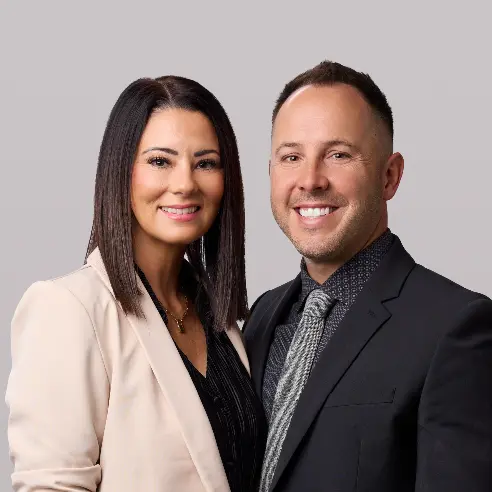
Sean and Shaunda Killingsworth have extensive experience working with remote and out-of-state buyers. We know how to give you the information and the on-the-ground presence that makes this kind of purchase work — live walkthroughs, proactive research, honest assessments of what we see. If you're considering buying in Pensacola from a distance, this is exactly the situation where having the right agent makes all the difference.
Sean & Shaunda Killingsworth Engel & Völkers Pensacola 190 South Jefferson Street, Pensacola, FL 32502 📞 +1 850-332-2457 ✉️ killingsworthhomes@gmail.com 🌐 movingtopensacolabeach.com
If you're relocating to Northwest Florida, let's talk.
Categories
Recent Posts