What New Residents Love Most About Pensacola
There's no better source of honest relocation intelligence than people who just made the move. Not the five-year veterans who've forgotten what surprised them, and not the tourism boards who need you to visit — the people who arrived in the last 12–24 months, who still remember what they expected and can clearly articulate what they found.
We talk to new Pensacola residents constantly. We help them find their homes, we follow up after they've settled in, and we listen when they tell us what they didn't expect. Over time, certain themes emerge — the things that come up again and again when new residents describe what they love most about living here.
This is that list. Not marketing. Not our opinion as agents. The actual things that new residents tell us they love — often things they didn't predict when they were researching the move from afar.
1. "The Beach Is Better Than I Expected — And I Can Go Whenever I Want"
This is almost always the first thing people mention, and the depth of feeling behind it surprises even us after hearing it many times.
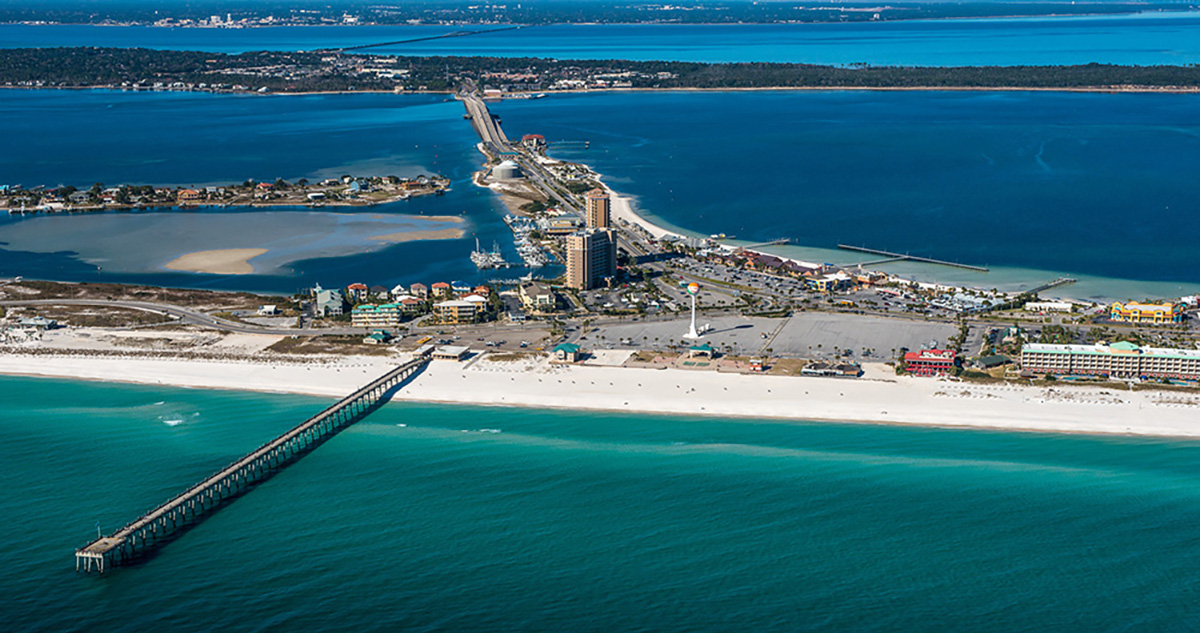
People visit Pensacola Beach and think it's beautiful. They move here and discover that living near it is a fundamentally different experience than visiting it. The first time a new resident goes to the beach on a random Tuesday in November — no crowds, no planning, just a 20-minute drive and a walk on pristine white sand — something shifts.
The beach stops being a destination and becomes part of the rhythm of life. A quick stop on the way home. A morning walk before work. A place to take a phone call while watching the Gulf. It never stops being beautiful. You just stop treating it as extraordinary — which, in the most wonderful way, makes it extraordinary all over again.
The specific thing new residents note: Pensacola Beach's Gulf Islands National Seashore protection means stretches of it will never be developed. Natural, uncrowded, and preserved. That distinction from more developed beach markets becomes deeply appreciated once you've lived here.
2. "The Financial Relief Is Real and Immediate"
People researching Pensacola know it's affordable. But knowing it and living it are different things.
The financial relief that new residents describe — especially those coming from high-cost markets — is visceral. A housing payment that's $1,000/month less than what they were paying. No state income tax appearing in their first Florida paycheck. The realization that they can go to a nice dinner and not calculate for 15 minutes whether it's worth it.
"I stopped checking my bank account every day," is a phrase we've heard more than once. "I started saving money without trying for the first time in my adult life" is another.
For people who moved from the Northeast, California, or major metro areas, this financial reset is often described as transformative — not just as a budget improvement but as a psychological unburdening. The low-grade financial anxiety that most people in expensive cities carry as background noise simply quiets down.
3. "The People Are Genuinely Friendly — And It's Not Superficial"
This one surprises transplants from larger cities most consistently.
Pensacola has a culture of genuine neighborliness. People introduce themselves. Neighbors bring food when you move in. Waves happen between strangers at the beach. Conversations start in grocery store lines. It's not the performative friendliness of some Sun Belt cities — it's the real thing, rooted in a community that has existed for generations and has a genuine sense of place and identity.
New residents who came from cities where they didn't know their neighbors' names — after years of living next door — regularly describe a profound sense of relief at this cultural shift. "My neighbors knew my name within a week," is a common variation of this story.
The military community component amplifies this. The culture of looking out for people who are new in town — people who've been the new person themselves, repeatedly, through multiple PCS moves — creates an unusually welcoming infrastructure for newcomers.
4. "I'm Outside More Than I've Been Since Childhood"
The outdoor lifestyle here activates something in people that suburban and urban life had dormant.
It's not just the beach. It's kayaking the Blackwater River on a Saturday and discovering it's one of the most beautiful places they've ever been. It's catching their first redfish from a beach pier and realizing fishing is actually extraordinary when the setting is right. It's a Sunday bike ride through East Hill that becomes a weekly ritual. It's hiking Big Lagoon State Park and coming back covered in wonder rather than exhaustion.
The infrastructure for outdoor living here — parks, water access, fishing piers, kayak launches, cycling routes, state forests — is exceptional and largely free. New residents consistently describe a shift in how they spend weekends within the first few months of arriving. Activities that would have been planned events in their previous city become casual, spontaneous parts of regular life.
The mild fall-through-spring climate is the enabling factor. When it's 72 degrees and clear on a Thursday afternoon and you're working remotely, the kayak in the garage is not a far-fetched impulse. People go outside because it's easy and beautiful to do so — and then they wonder why they ever lived anywhere that made it harder.
5. "The Food Scene Is So Much Better Than I Expected"
Almost nobody moves to Pensacola expecting a genuinely good restaurant scene. Almost everyone is surprised.
The locally-owned restaurant community on and around Palafox Street is real and good. Not Miami good or New York good — but locally-owned, creative, ingredient-driven restaurants that would hold their own in any mid-sized food city in the country. New residents from major markets who expected to miss good food find themselves discovering new favorites regularly in the first months.
The Gulf seafood is its own category. Fresh grouper. Local shrimp. Apalachicola oysters. Triggerfish and amberjack. Priced as local food, not premium imports. New residents who enjoy cooking talk about grocery runs to local seafood markets the way people in other cities talk about farmers market hauls — with genuine excitement about what they found and what they're going to do with it.
"I eat better here than I did in [major city]" is a common variation of this story, paired with "and I spend less doing it."
6. "The Pace of Life Is What I Didn't Know I Needed"
This one takes longer to appreciate — and lands deeper when it does.
Most people don't know they're exhausted by the pace of their current life until they experience the alternative. Pensacola's pace is slower. Commutes are shorter. Lines are shorter. The background hum of urban density — the noise, the constant stimulation, the sense that you need to be somewhere or doing something — is quieter.
Within a few months of living here, new residents describe a kind of recalibration. They have more time. Evenings feel longer. Weekends feel like weekends again. They stop forgetting their friends' birthdays because the mental load of daily logistics has lightened.
This is not "nothing to do" — it's "room to actually do the things that matter." People who moved here start finishing books they hadn't touched in years, taking up hobbies they'd abandoned, having longer dinners with friends. The pace of Pensacola creates space for actual life in a way that many previous environments didn't.
7. "The Military Community Made Us Feel Welcome Immediately"
For military families — and even for civilians who find themselves adjacent to that community — the military culture in Pensacola creates an unusually effective welcome infrastructure.
People who've been the new family in town many times over develop a particular generosity toward new arrivals. They know what it's like to be in a place where you don't know anyone, and they respond proactively rather than waiting to be sought out. Military spouse networks, squadron social events, chapel communities, and informal neighbor connections all activate quickly for new arrivals at NAS Pensacola.
Non-military newcomers who land in neighborhoods with military families often benefit from this culture by proximity. The general ethos of looking out for new neighbors is not exclusive to the military community — it permeates much of Pensacola's character — but the military community models and amplifies it.
8. "The Winters Are Everything I Hoped"
This one particularly affects transplants from cold-weather states, but almost everyone mentions it.
The first Pensacola winter is often described as revelatory. Watching a January weather alert on their phone and seeing it say "high of 64, sunny" while knowing what January looks like where they came from produces a specific kind of joy. The first time a new resident eats dinner on an outdoor patio in February, or walks the beach on New Year's Day in a light jacket, the decision to move here gets validated in a way that's difficult to articulate but immediately felt.
The cumulative effect of a mild winter — months of days spent outside that would have been spent inside, huddled against cold — is significant. People who moved from northern states describe feeling physically better in their first year. More active. More social. Less seasonally depleted.
"I didn't realize how much the winter was affecting me until I didn't have one," is a sentiment that comes up in various forms from northern transplants.
9. "The Kids Are Thriving"
For families who moved with children, this is consistently the most emotionally resonant feedback we hear.
Children in Pensacola grow up outside in a way that previous generations — and most contemporary suburban children elsewhere — simply don't. They swim, fish, explore, kayak, and build the kind of outdoor childhood that most parents nostalgically describe from their own youth but rarely manage to provide in practice.
Kids adjust to new environments faster than adults, and Pensacola's community-oriented neighborhoods and active youth programs create connection points quickly. Sports leagues, church youth groups, neighborhood networks, and school communities all work faster here than in more transient urban environments.
Parents report that children who were anxious about the move are thriving within a few months. Children who didn't know they needed a different kind of childhood discover it here. This is one of the most consistent and meaningful pieces of feedback we receive from families who relocated.
10. "I Stop Dreaming About a Different Life — Because I'm Living It"
This is the one that moves us most when we hear it.
A significant portion of the people who move to Pensacola were, in their previous location, people who dreamed about a different kind of life. They had a mental picture of what they wanted — more time, more nature, more community, more financial breathing room, more of a sense that their daily life was actually good — and they were living in a place that didn't deliver it.
The move to Pensacola, for these people, closes that gap. Not perfectly — no place is perfect — but substantially. They stop doomscrolling real estate listings in other cities. They stop having the "what if we moved somewhere else" conversation. They stop feeling like real life is somewhere in the future, waiting to begin.
"I'm not waiting for the weekend anymore," one resident told us. "I like Tuesdays now."
That's what Pensacola does at its best. It makes Tuesdays good.
What Will You Love?
Everyone's version of this list looks a little different. The retired couple and the young remote-working professional and the military family each find different things to love first — and different things surprise them most.
But the common thread, across almost every new resident we've talked to over the years, is this: Pensacola delivers more than people expected, in the ways that matter most, more consistently than any place we know.
Ready to Find Out What You'll Love About Pensacola?
Sean and Shaunda Killingsworth love this city and love helping people find their place in it. If you're considering the move, let's talk about what your version of a great life here looks like.
Sean & Shaunda Killingsworth
Engel & Völkers Pensacola
190 South Jefferson Street, Pensacola, FL 32502
📞 +1 850-332-2457
✉️ killingsworthhomes@gmail.com
🌐 movingtopensacolabeach.com
If you're relocating to Northwest Florida, let's talk.
Categories
Recent Posts