What Surprised Us Most After Moving to Pensacola
You can research a city for months before you move there. You can read every article, watch every neighborhood tour video, join every Facebook group, and talk to everyone you know who's been there. And then you arrive — and the place surprises you anyway.
Every city has things that can only be understood by living there. The things that don't show up in relocation guides. The things that take you off guard — pleasantly, sometimes uncomfortably, occasionally both at once.
This post collects the surprises. The things that new Pensacola residents most consistently say they didn't expect — from the practical to the emotional, from the delightful to the genuinely challenging. If you're planning a move here, this is the intelligence that only comes from people who've already made it.
"I Didn't Expect to Feel at Home This Quickly"
This is the surprise that comes up most often — and the one that means the most when it does.
People moving to a new city, particularly one where they don't know anyone, brace for a prolonged period of feeling like an outsider. They expect months of awkwardness, of not knowing the local spots, of missing their old community. In Pensacola, that period is almost universally shorter than expected.
The combination of a genuinely welcoming community culture, the military community's infrastructure for welcoming newcomers, and the naturalness of the outdoor social environment — beach conversations, fishing pier neighbors, farmers market regulars — means that connection happens faster here than most people anticipate.
"We knew more people after three months than we did after three years in our last city," is a version of this story we hear regularly. It still surprises us to hear it, even though we've heard it many times.
"The Beach Never Gets Old — and That Surprised Me"
Most people expect to normalize the beach. They figure they'll be excited for the first few months and then it'll just become background — something they appreciate but no longer feel.
That's not what happens. Or at least, it's not what happens the way people expect.
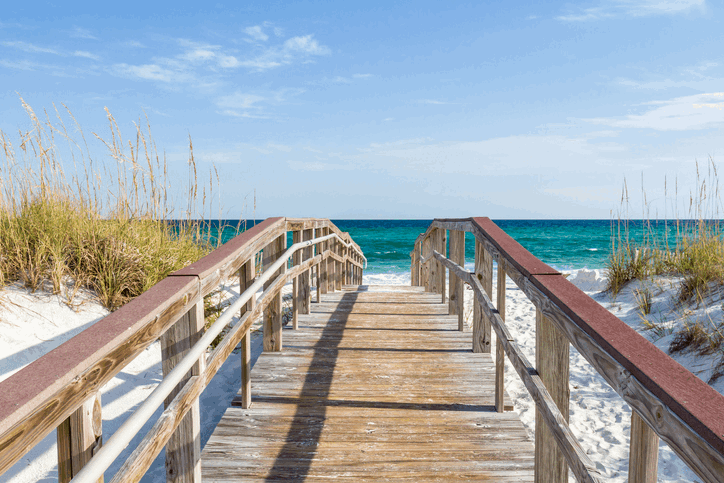
The beach does become familiar — but familiar in the way a beloved neighborhood park is familiar, not in the way a novelty wears off. The familiarity doesn't remove the beauty. It deepens your relationship with it. You start noticing things — the way the light changes the water color in different seasons, the particular shade of green after a rain, the way October mornings feel different from April mornings on the same stretch of sand.
"I've lived here two years and I still catch my breath when I crest the bridge and see the Gulf," is a sentence we've heard in various forms from people who expected to be over it by now. They aren't. Most longtime Pensacola residents aren't either.
"The Summer Heat Was Harder Than I Prepared For"
This is the negative surprise that comes up most consistently — and consistently. Almost nobody from outside the Gulf Coast fully prepares for their first Pensacola summer.
It's not just the temperature. It's the combination of heat and humidity that produces a "feels like" reading that, on a July afternoon, can push well past 105°F. It's the way it limits your schedule — outdoor activity shifting to mornings and evenings, midday becoming an indoor proposition. It's the electric bill in August. It's the feeling of walking from an air-conditioned car to an air-conditioned store and being drenched by the time you cross the parking lot.
People from the South think they're prepared. They're partially right. People from the North are almost never fully prepared, no matter how much they read about it.
The saving grace, as almost everyone notes: it passes. October arrives and the world opens back up. And the relief of that first fall morning — when the humidity drops and the air is clear and cool — produces a joy that people who've never experienced it don't fully understand until they do.
"I cried on the first day it felt like fall," one transplant from Minnesota told us. She was not joking.
"I Had No Idea How Good the Food Would Be"
This one surprises almost everyone who didn't research it specifically — and even some who did.
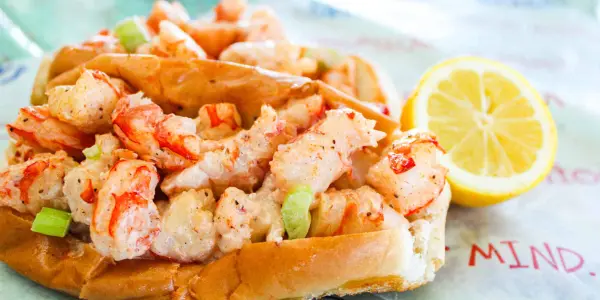
Pensacola has a genuinely excellent food scene. Not Miami. Not New Orleans. But locally-owned restaurants with real culinary ambition, excellent ingredients, and the kind of consistent quality that builds a loyal regular customer base rather than relying on tourist traffic.
And the Gulf seafood. Oh, the Gulf seafood.
People who move here and enjoy cooking talk about going to local seafood markets the way they used to talk about their favorite grocery store. Fresh grouper for $14/pound. Local brown shrimp. Gulf oysters. Fish that was in the water two days ago, available on a Tuesday afternoon, at prices that make no sense given the quality.
"I've eaten more seafood in the past year than in the previous decade of my life," is a line we've heard more than once. It's usually followed by some version of "and I can't believe how much better it is."
"The Military Community Welcomed Us Even Though We're Not Military"
This surprise comes up specifically from civilian transplants who didn't expect the military community's welcoming culture to extend to them.
The ethos of welcoming new arrivals — built into the military community's DNA from decades of PCS moves and being the new family in a new city — doesn't stay neatly within military circles. It permeates the neighborhoods, the churches, the sports leagues, and the social fabric of communities where military and civilian residents live alongside each other.
Civilian transplants who landed in neighborhoods with significant military family presence describe being welcomed in ways they didn't anticipate — invited to events, introduced around, included in social networks that formed quickly and felt genuine.
"I expected the military community to be separate from us," one civilian transplant told us. "Instead they were the first friends we made."
"The Winters Felt Like a Personal Gift"
For people who moved from cold-weather states, the first Pensacola winter produces a specific kind of emotional response that is difficult to describe to people who haven't experienced it.
It's not just "nice weather." It's the psychological experience of escaping something that was costing you more than you realized. The first January morning when you check the weather and it says 62 and sunny while knowing what that day looks like in your former state — that moment hits differently than expected.
People describe feeling physically better. More energetic. Less seasonally depleted. Going outside every day instead of dreading it. The realization that the winter fog that used to settle over them from November through March simply doesn't come here.
"I didn't know how much the winter was affecting me until I didn't have one," is a sentence we've heard in various forms from transplants from Ohio, Michigan, New York, Illinois, and beyond. The winters here feel like a gift because, compared to what many people were living before, they genuinely are.
"Traffic Was More of an Issue Than I Expected"
Pensacola is not a congested city by major metro standards. But new residents who come expecting Southern small-town traffic patterns sometimes find themselves surprised by specific pressure points.
The bridges are the main culprit. The Three Mile Bridge and the Bob Sikes Bridge are genuine bottlenecks during peak times — summer beach traffic, morning and evening commutes, any time there's an accident or a drawbridge opening. A trip that takes 10 minutes in January can take 45 minutes on a Saturday afternoon in July.
Military gate traffic is another factor. The morning commute patterns around NAS Pensacola affect several surrounding corridors in ways that people who don't anticipate them find frustrating.
The surprise isn't that Pensacola is gridlocked — it isn't. It's that the specific pressure points are more intense than the city's overall size would suggest. Learning the timing windows and the workarounds is part of becoming a local.
"How Much Nature There Is Beyond the Beach"
People research Pensacola Beach. They don't always research the extraordinary natural environment that surrounds the city on every side.
The Blackwater River. Big Lagoon State Park. Gulf Islands National Seashore. Perdido Bay. Escambia Bay. The trail systems throughout the state forest. The bird migration that makes Pensacola a world-class birding destination in spring and fall.
New residents who discover these places — often within the first few months of arrival, often by accident — describe a kind of compounding delight. They came for the beach and found a whole natural world they didn't know was there.
"I thought I was moving to a beach city," one resident told us. "I moved to one of the most ecologically diverse places I've ever lived."
"How Much History This City Has"
Pensacola is the oldest European settlement in the continental United States. Most people don't know this, and arriving here without knowing it means the depth of the city's history comes as a genuine surprise.
The historic districts of downtown Pensacola, the Fort Barrancas and Fort Pickens preserved military installations, the National Naval Aviation Museum, the T.T. Wentworth Jr. Florida State Museum, the diversity of cultural influences from Spanish, French, British, and Native American heritage — these create a city with more historical texture than most residents anticipated.
People who enjoy history find themselves genuinely absorbed by Pensacola's story. It's a city that rewards curiosity about place in ways that newer, less historically complex cities don't.
"How Much I Miss It When I Leave"
This surprise takes a little longer to land — but it might be the most telling of all.
Pensacola residents who travel for work or vacation describe a specific feeling when they return. They cross the bridge into the city or onto Pensacola Beach and something settles — a recognition that this is home in a way that feels earned rather than assumed.
People who weren't sure the move was right in the early months describe this feeling as the moment they knew. Not the good days when everything was easy and beautiful — but the return from a trip, the crossing of that bridge, the particular blue-green of the Gulf at a specific time of day, and the quiet certainty: yes. This is it.
"I've moved a lot," one retired military spouse told us. "This is the first place I've ever actually missed."
"The Decision Feels Better With Time, Not Worse"
For most major decisions, the emotional intensity fades as time passes and reality settles in. Sometimes that settling reveals the decision was right. Sometimes it reveals cracks that excitement obscured.
In Pensacola, the consistent pattern we observe is that the decision to move here gets better with time rather than worse. The people who had doubts in the first summer have usually resolved them by the first fall. The people who needed a year to feel settled are largely glad they stayed. The people who gave it two years and left are a small minority — and most of them left for specific circumstances rather than because Pensacola failed to deliver.
"I came here thinking I'd stay two or three years and see how it went," is a sentence that often ends with "and now I can't imagine leaving."
That's the surprise that matters most. Not the summer heat or the bridge traffic or the food scene — those are things you can research. It's the discovery that the life you built here turned out to be better than the one you left, in ways you couldn't fully have predicted.
That's what makes Pensacola worth the leap.
Ready to Find Out What Will Surprise You?
Sean and Shaunda Killingsworth have helped hundreds of people make this move — and heard thousands of versions of these surprise stories. If you're considering the leap, let's talk through what your specific version of this experience might look like.
Sean & Shaunda Killingsworth
Engel & Völkers Pensacola
190 South Jefferson Street, Pensacola, FL 32502
📞 +1 850-332-2457
✉️ killingsworthhomes@gmail.com
🌐 movingtopensacolabeach.com
If you're relocating to Northwest Florida, let's talk.
Categories
Recent Posts